How Overbed Tables Influence Patient Independence and Caregiver Workflow
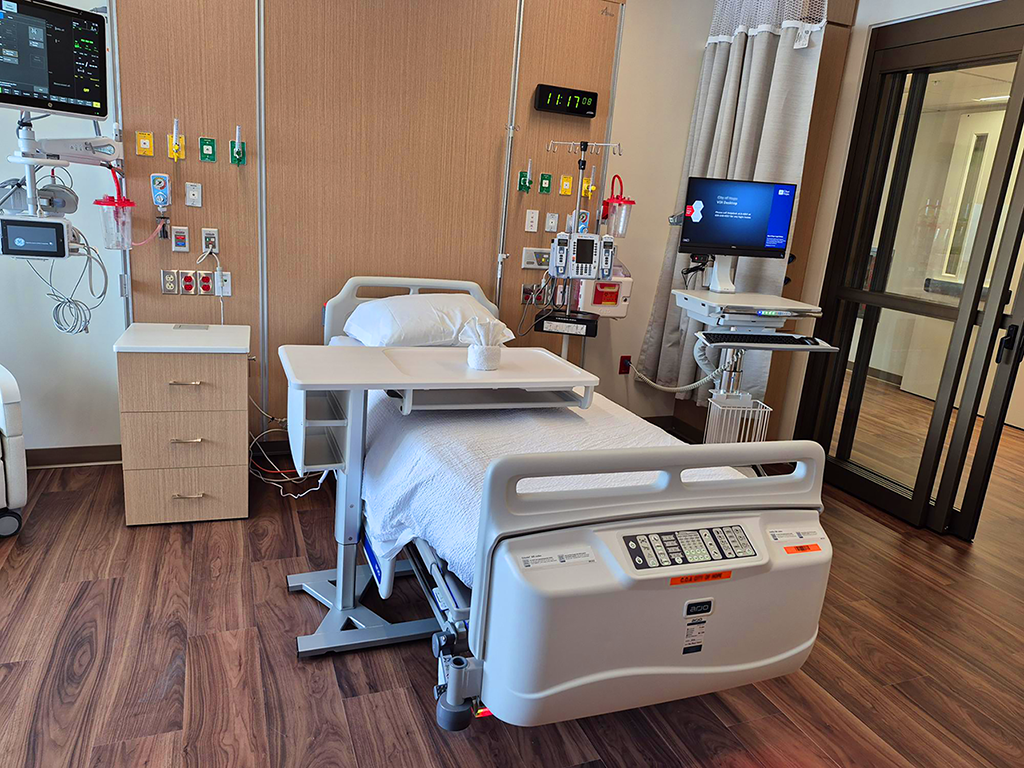
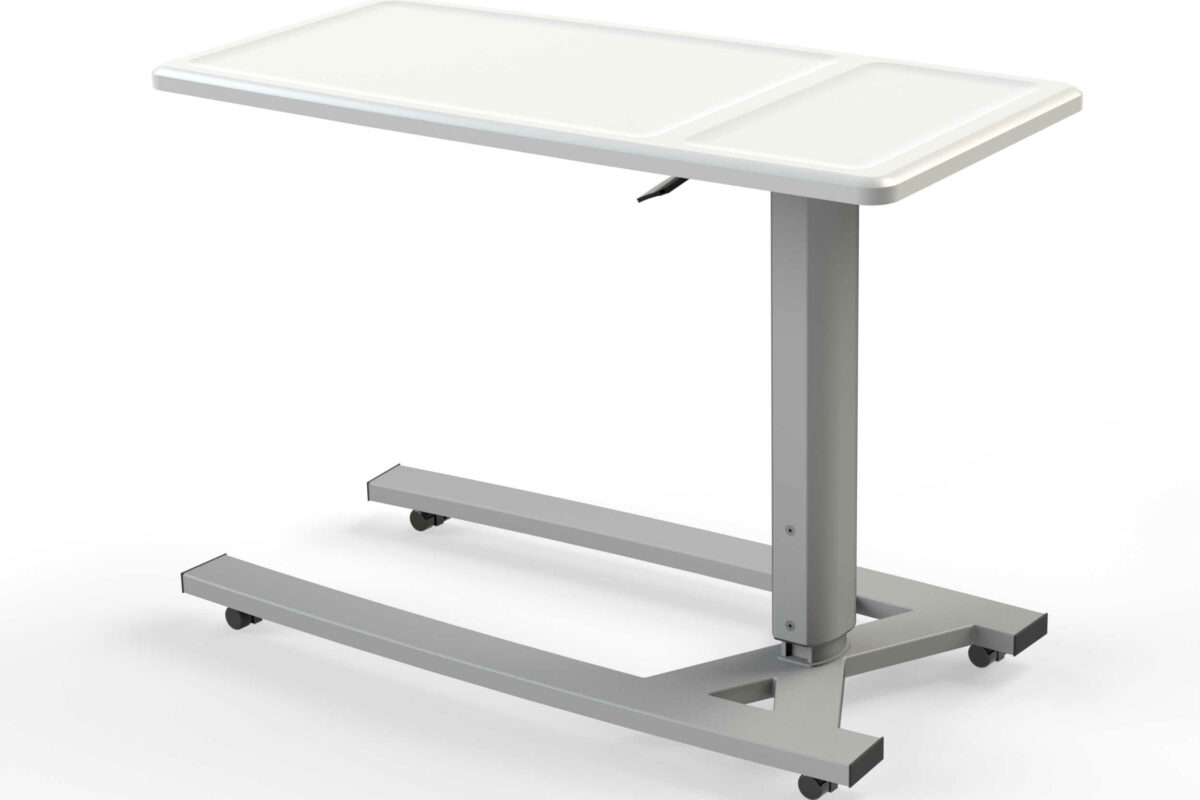
Overbed tables play a central role in patient rooms, supporting meals, personal items, daily routines, and caregiver tasks throughout a hospital stay. Although they may appear simple, small differences in stability, surface material, mobility, and accessory design have a meaningful impact on both patient independence and caregiver workflow. A well-designed overbed table can reduce staff workload, improve patient comfort, and streamline bedside interactions, while a poorly designed one can disrupt care activities and create ongoing frustration.
Patient independence is a critical component of recovery. Many patients struggle with reduced strength, limited reach, or impaired dexterity, making it challenging to manage personal belongings or reposition a table without assistance. MedViron overbed tables use KYDEX thermoplastic tops that are stable and durable under long-term daily use. A predictable surface helps patients feel confident placing phones, glasses, reading materials, or meal trays on the table. The consistent surface performance of KYDEX supports activities like writing, eating, or using digital devices without the pealing, swelling, or soft edges sometimes seen on laminate or thin thermofilm surfaces.
Storage accessibility also influences independence. Many overbed tables rely on secondary pull-out surfaces that sit beneath the top and slide outward to provide additional space. While common, these designs introduce mechanical friction, crevices, and pinch points that can be difficult for patients to operate. MedViron offers an alternative through a patented KYDEX undermount tray that sits directly beneath the work surface. This allows patients and caregivers to keep personal items close without relying on mechanical components. Although not readily apparent to the patient, the tray can be lifted out and washed. The tray avoids the hidden debris spaces that sliding mechanisms often create. The tray’s angular design assists patients in the retrieval of personal items they may have difficulty grasping. This approach improves dependability while simplifying the user experience for patients with limited mobility or strength.
For units that require expanded personal storage, the MedViron 39-inch Overbed Table offers an optional hanging pedestal with two narrow KYDEX trays supported by HDPE side panels. These trays are designed for small items such as phones, eyeglasses, or medications. Their placement and patented design support patients at mealtimes with readily available placement of personal items. The HDPE side panels provide lightweight structural stability. By placing storage in a convenient and reachable location, the pedestal design helps patients manage their belongings without needing frequent assistance from caregivers.
Caregivers rely on overbed tables dozens of times each day, often during time-sensitive tasks. The ability to reposition the table quickly and smoothly matters for bedside documentation, medication delivery, and family communication. Casters that move predictably allow caregivers to retrieve space, adjust positioning, and clear room for lifts, recliners, or procedural activities with minimal disruption. When the table glides smoothly, staff avoid the strain of forcing or lifting the table, especially during frequent repositioning.
Surface size and base geometry also play a role in workflow. In infusion therapy or oncology units, for example, the MedViron 36-inch I-Base Overbed Table provides unobstructed positioning around recliners. In medical-surgical environments, the 36-inch U-Base Overbed Table is versatile enough to slide beneath a wide range of bed frames or chairs. Units using 5th-wheel beds and stretchers depend on the Sotto Overbed Table, which is engineered with specific clearances that allow smooth placement without collision or awkward lifting. These variations support smoother workflows by aligning the table’s geometry with real-world care patterns.
For patients undergoing longer stays, participating in educational sessions, or managing multiple devices, the 39-inch Overbed Table offers more usable surface area. A larger top helps caregivers provide instruction or review materials with the patient, while still giving patients adequate space for personal items. This reduces table clutter, improves the patient experience, and supports shared caregiver-patient interactions.
Accessory options further enhance flexibility. Cupholders help prevent spills, tablet holders support digital engagement, and vanity trays assist with self-care tasks. When combined with KYDEX surfaces and removable trays, these features create an adaptable platform that serves a wide range of unit types. Patients benefit from a stable, predictable workspace, and caregivers gain a reliable surface that functions well through repeated use and frequent cleaning.
Across all models, MedViron prioritizes material durability and thoughtful design. KYDEX tops remain stable under repeated contact with hospital-grade cleaners. HDPE pedestal sides offer strength without unnecessary weight. Removable KYDEX trays simplify cleaning processes and eliminate mechanical failure points. These choices affect long-term usability and help maintain consistent appearance and performance in patient rooms.
Overbed tables are used constantly throughout the day, often without conscious attention to their role. Yet their influence extends to patient autonomy, caregiver efficiency, and overall room organization. By selecting overbed tables that support user independence, move predictably, and offer thoughtful storage options, hospitals can improve the reliability and comfort of everyday bedside interactions. MedViron’s overbed table collection is designed with these realities in mind, helping both patients and caregivers work more easily and confidently during each stage of care.
- One-Handed Height Adjustment: A Small Detail That Changes Everything
- Choosing the Right Overbed Table Base Type for Patient Care Environments
- The Not-So-Hidden Problem with Overbed Table Cupholders
- MedViron Overbed Table Accessories and Storage: Supporting Patients Without Compromising Cleanability
- How Overbed Tables Designed for 5th-Wheel Beds Improve Bedside Workflow
- Why Choose a U-Base Overbed Table?
- Case Study: Sotto Overbed Table Development
Related Posts
Who Gets to Use the Overbed Table? Introducing the medViron Overbed Table Care Pod
Who Gets to Use the Overbed Table? Introducing the medViron Overbed Table Care
See What’s New from medViron at Healthcare Design Conference + Expo 2026
See What’s New from medViron at Healthcare Design Conference + Expo 2026 Four
From Phones to Backpacks: A Hospital Bedside Cabinet Designed for What Patients Bring
From Phones to Backpacks: A Hospital Bedside Cabinet Designed for What Patients Bring