Hospital Bedside Cabinets for Patient Rooms

Hospital Bedside Cabinets Designed for Durability, Cleanability and Ease of Use
Hospital bedside cabinets are one of the most frequently used pieces of furniture in the patient room, yet they are often selected based on price or appearance rather than long-term performance. A well-designed patient room bedside cabinet supports daily use from both patients and caregivers, influencing storage, mobility, and overall room function.
A patient room bedside cabinet must support daily use from both patients and staff. This includes easy access to storage, stable mobility when repositioning, and surfaces that can be consistently cleaned without interruption. Drawer configuration, material selection, and base design all influence how the cabinet performs under continuous use. Bedside cabinets are often specified as standard furniture, but their performance directly affects how patient rooms function day to day.
MedViron bedside cabinets are designed with a focus on durability, cleanability, and ease of use. Removable drawer tubs allow for full interior access during cleaning. Our Spill Containment tops provide a non-porous, seamless work area. Cabinet configurations are available in multiple drawer and door layouts to support different patient needs and facility standards.
How to Choose the Right Hospital Bedside Cabinet
Hospital bedside cabinet selection should be based on how the cabinet will be used throughout the day, rather than on appearance alone. Factors such as storage needs, mobility requirements, and material durability all influence long-term performance. Facilities should evaluate bedside cabinets in the context of real patient use, including the types of items stored, frequency of repositioning, and cleaning routines. Whether specifying cabinets for new construction or replacement programs, facilities should evaluate how bedside storage performs over time.
- Match storage to patient needs
Consider what patients actually bring into the room, including bags, electronics, and personal items. - Evaluate mobility requirements
Determine whether the cabinet will need to be repositioned frequently or remain stationary. - Select materials based on long-term use
Prioritize surfaces that maintain integrity under repeated cleaning and daily wear. - Standardize where possible
Using consistent cabinet types across rooms can simplify maintenance and improve workflow. - Plan for durability, not just initial cost
Cabinets are used continuously. Long-term performance should outweigh short-term savings.
Explore medViron Hospital Bedside Cabinets
The following medViron bedside cabinet series are designed to support a range of patient room applications, from cost-conscious environments to high-durability installations:
1. Martello Bedside Cabinet Series
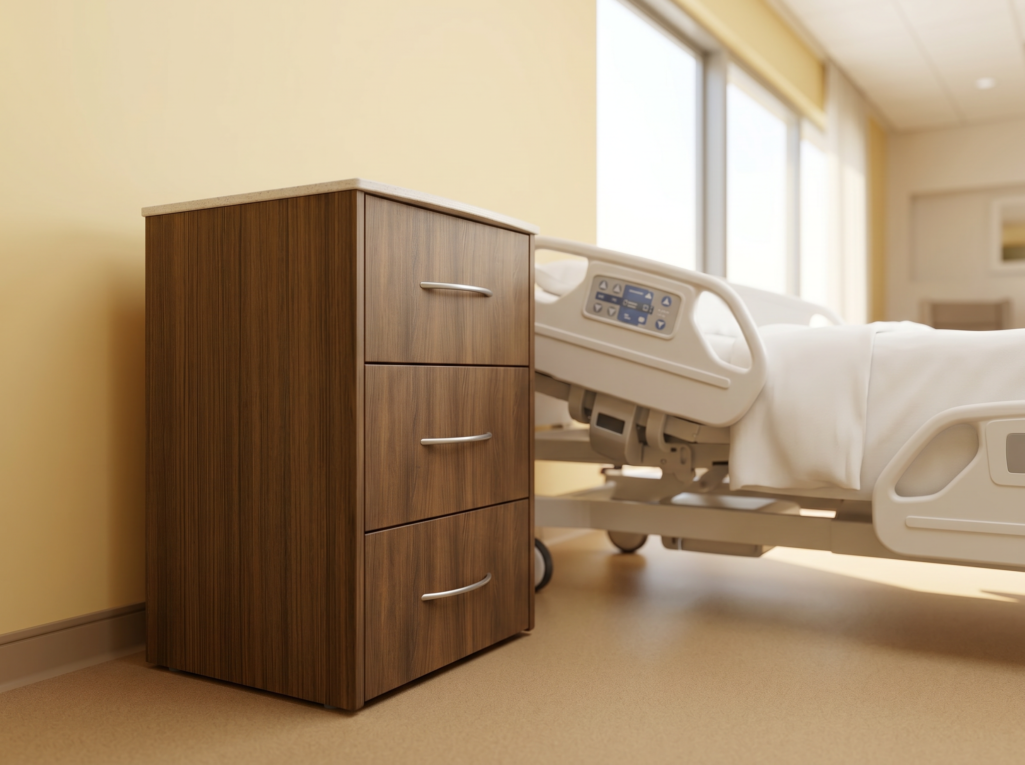
Designed to meet the highest standards of healthcare furniture
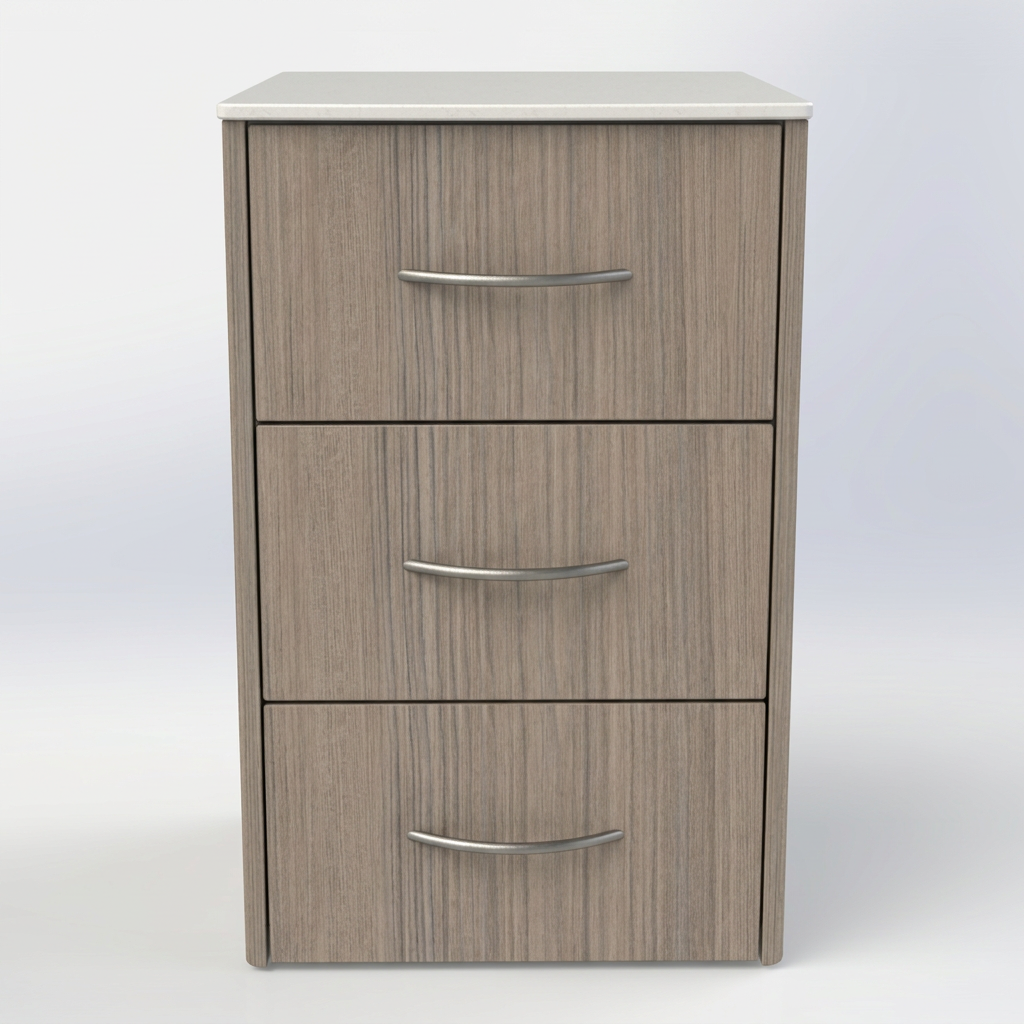
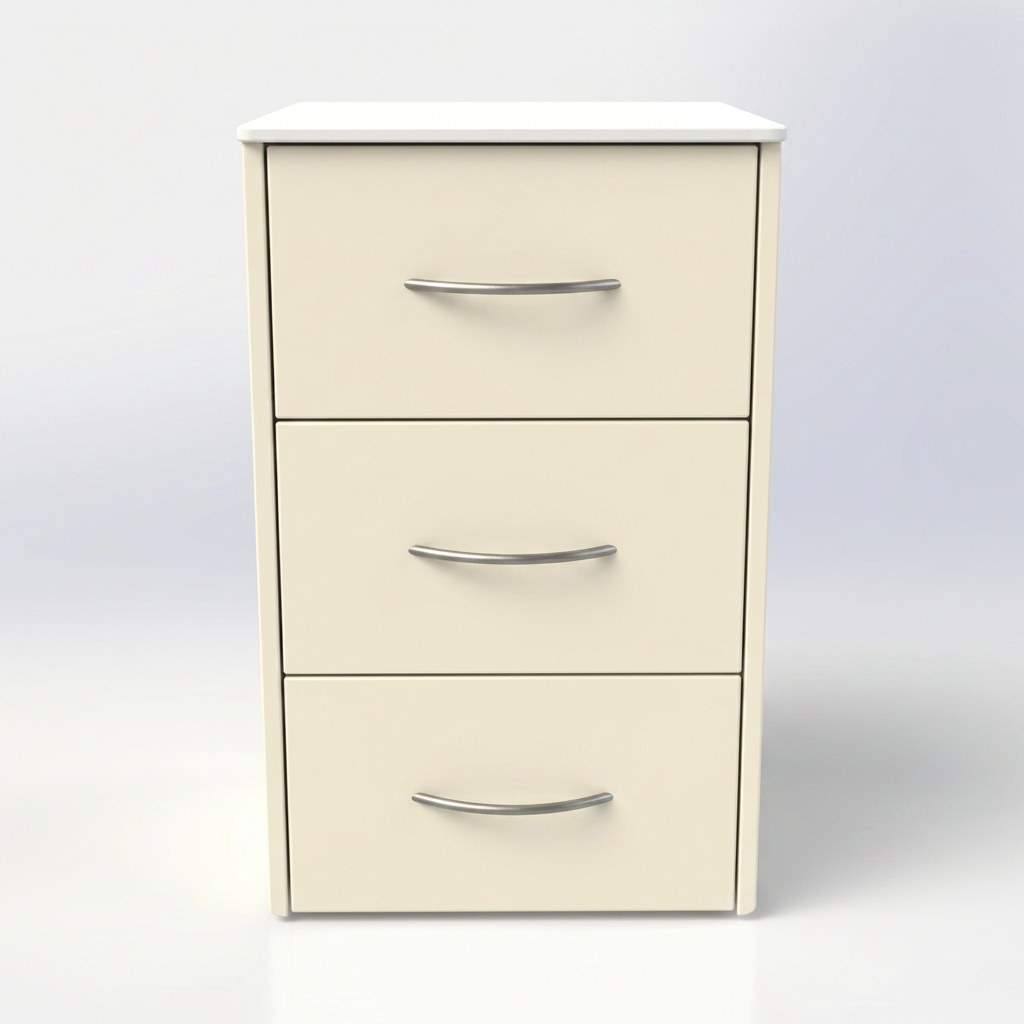
The Martello bedside cabinet series is designed for patient rooms where durability, accessible storage, and consistent daily use are key considerations. Multiple configurations are available to support different storage needs, from organized drawer layouts to enclosed storage for larger personal items. This allows facilities to match storage capacity to patient needs rather than providing only a single cabinet type across all rooms.
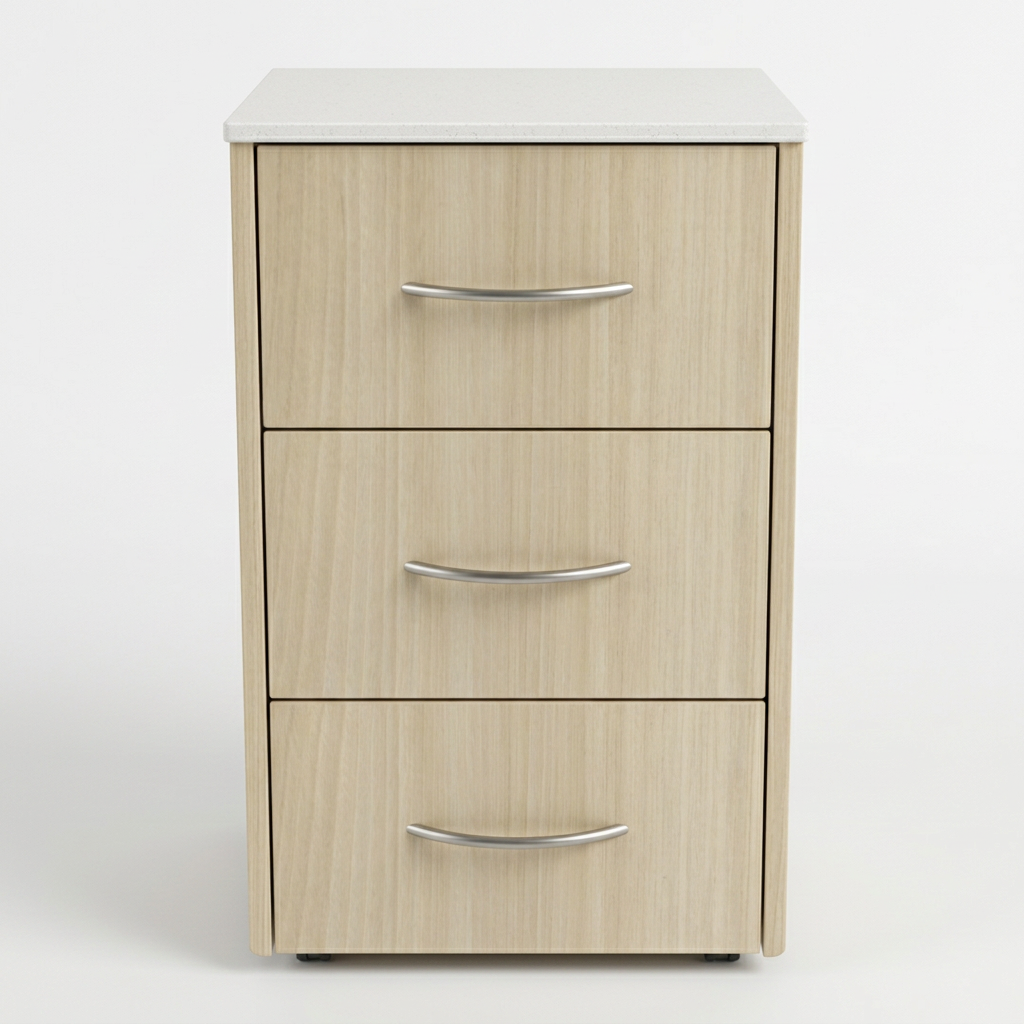
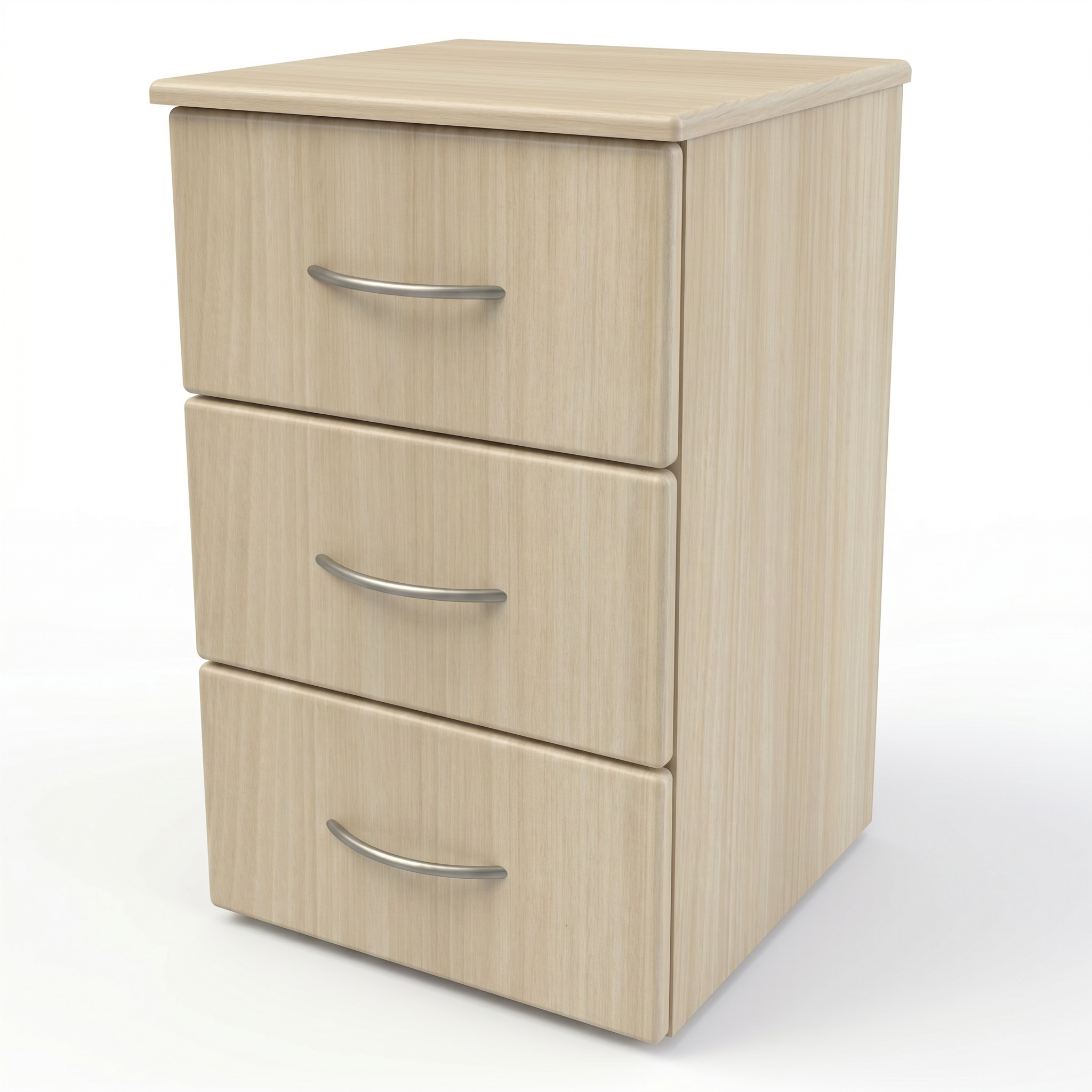
- Three-Drawer Configuration
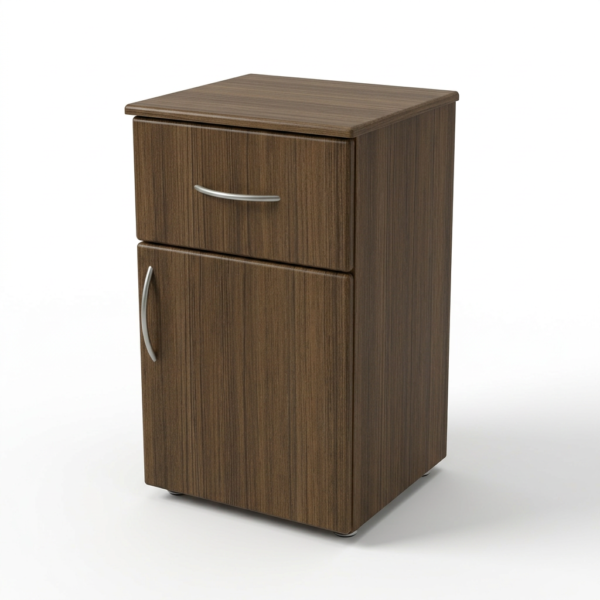
Supports more structured organization, allowing separation of personal items for longer stays. - Drawer + Door Configuration
Combines drawer storage with an enclosed cabinet space for bulkier items such as bags or clothing. - Removable Drawer Tubs
Enables full access to the interior for cleaning and maintenance, supporting consistent upkeep over time. - Durable Construction
Designed to withstand continuous interaction in the patient room, including frequent drawer use and surface contact. - Best suited for: patient rooms requiring a balance of durability, flexible storage configurations, and accessible patient use.
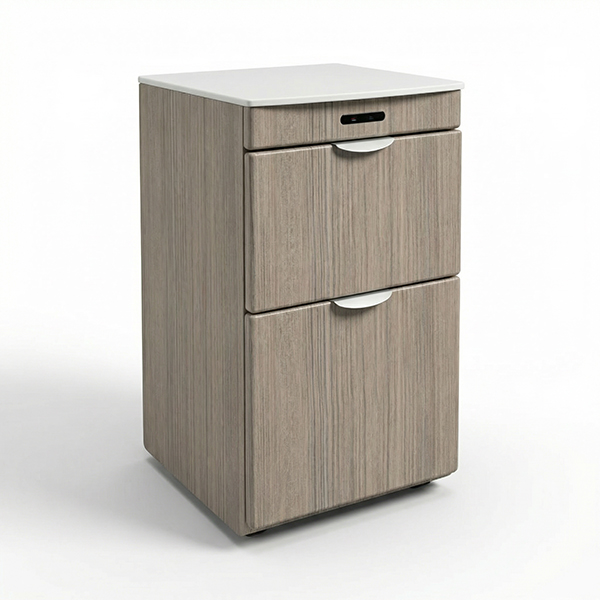
Martello Two-Drawer Hospital Bedside Cabinet

Features
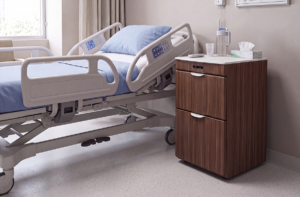
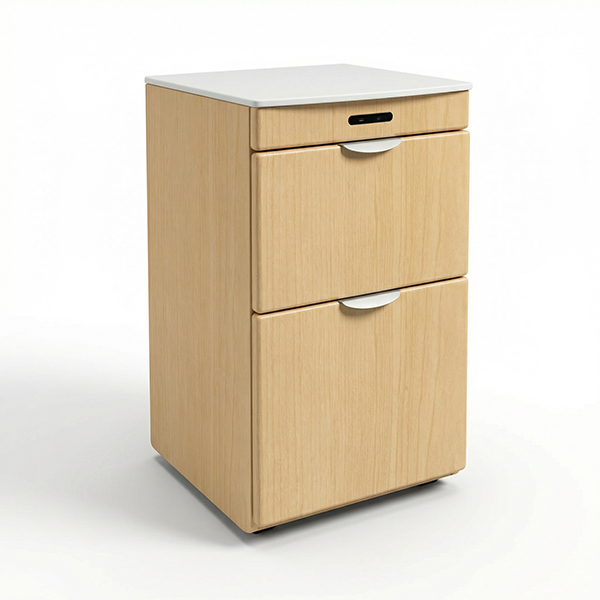
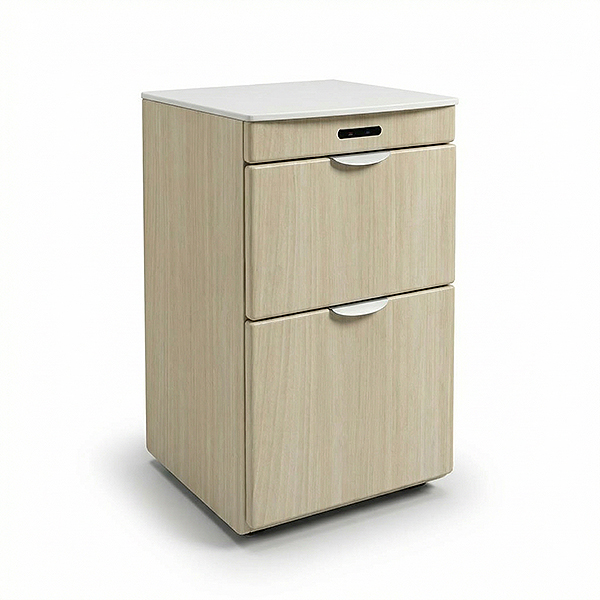
The Martello Two-Drawer Hospital Bedside Cabinet was designed for both patients and staff, featuring a large lower drawer for backpacks, purses and personal items, and a front-mounted USB charging port. Features a solid surface top for durability and everyday performance, and a removable top-drawer tub for easy cleaning. Rolls effortlessly on hidden twin-wheel casters.
- Solid surface top
- USB charging ports
- Concealed twin-wheel casters
- Removable top drawer plastic liner for easy cleaning
- Large bottom drawer for backpack and purse storage
- KYDEX thermoplastic exterior finish
- Limited lifetime warranty
2. Dura-Tough Bedside Cabinet Series

Durable, Easy-to-Clean Solution for Patient Rooms
The Dura-Tough bedside cabinet series is designed for patient rooms where long-term durability and consistent performance under heavy use are primary considerations. The Dura-Tough series focuses on material resilience, structural integrity, and components that maintain performance over years of continuous daily use.
- Multiple Configuration Options
Available in a range of layouts, including drawer and door combinations, to support standard patient room requirements while maintaining consistent construction across units. - Thermoplastic Exterior Surfaces (KYDEX®)
Drawer fronts and exposed cabinet surfaces are constructed with impact-resistant thermoplastic, designed to resist chipping, cracking, and edge wear over time. - Melamine Casework Structure
Provides a stable, cost-effective cabinet body while supporting the durability of higher-impact exterior components. - Removable Drawer Tubs
Allow full access to drawer interiors for cleaning and maintenance, supporting consistent upkeep in high-use environments. - Durable Hardware and Drawer Systems
Designed to withstand repeated opening and closing cycles without loss of performance. - Mobility Options
Available with casters or glides depending on facility preference and room requirements. - Best suited for: patient rooms with high turnover, heavy daily use, or environments where long-term durability and consistent performance are prioritized.
3. Value Bedside Cabinet Series
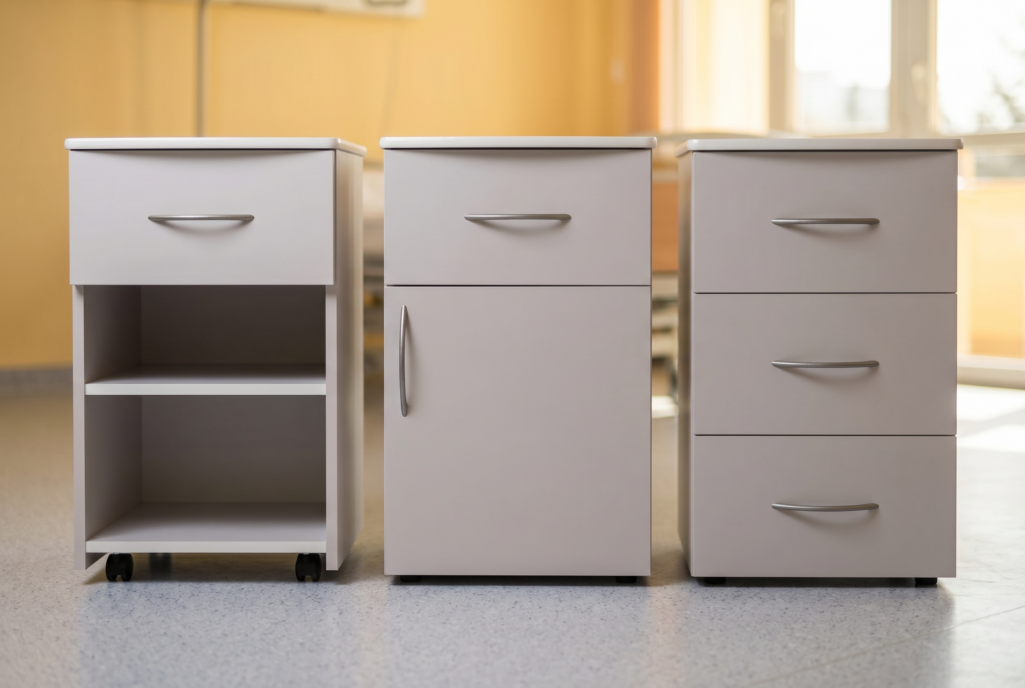
Fully Assembled Value Bedside Cabinets
The Value bedside cabinet series is designed for projects where cost control and functional performance are the primary considerations. These cabinets provide essential bedside storage and usability while maintaining a straightforward construction approach suited to large-scale installations or budget-driven environments.
- Multiple Configuration Options
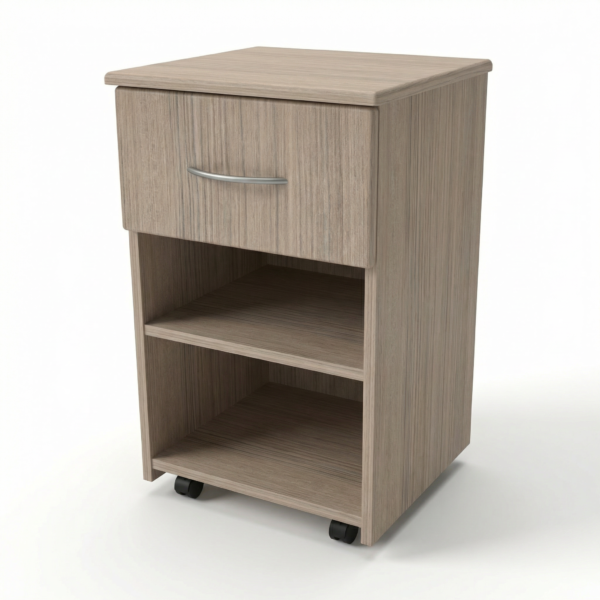
Available in open shelf, drawer + shelf, drawer + door, and three-drawer layouts, allowing facilities to select configurations that meet basic patient storage needs. - Melamine Construction
Utilizes thermofused laminate surfaces for a clean, consistent appearance while supporting cost-effective projects. - T-Mold Edge Top (Standard)
Provides a durable work surface designed for everyday use, with edge protection suited to general patient room conditions. - Mobility Options
Offered with casters or glides depending on room layout and facility preference. - Straightforward, Serviceable Design
Designed to support basic functionality with components that are easy to maintain across large quantities of units. - Best suited for: projects where budget, scale, and functional requirements are the primary drivers, including standard patient rooms, replacement programs, and large facility rollouts.

Flat-pack Value Bedside Cabinet:
All melamine, t-mold melamine top, open case with one fixed shelf. Ships knock-down, assembly required. Available in all of our standard colors.
Hospital Bedside Cabinets: What Actually Matters When Specifying for Patient Rooms
Types of Hospital Bedside Cabinets
Hospital bedside cabinets are available in several configurations, each designed to support different storage needs and room layouts. The number of drawers, presence of a door, and open storage options all affect how patients and caregivers interact with the cabinet throughout the day. Selecting the right configuration depends on what needs to be stored and how frequently those items are accessed.
- Open Shelf Cabinets
Provide quick access to frequently used items, but offer limited concealment for personal belongings. - Drawer + Open Shelf
A common configuration that balances concealed storage with easy access. - Drawer + Door Cabinets
Offer enclosed storage for larger personal items such as bags or clothing. - Three-Drawer Cabinets
Maximize organization and separation of personal belongings, often preferred in longer-stay environments.
Materials Used in Bedside Cabinets
Material selection plays a direct role in how a hospital bedside cabinet performs over time. Surfaces are exposed to constant use, repeated cleaning, and daily contact from both patients and caregivers. The choice of material affects durability, surface integrity, edge performance, and how easily the cabinet can be maintained throughout its lifecycle. Understanding the differences between common materials helps ensure the cabinet continues to perform beyond initial installation.
- Melamine (Thermofused Laminate)
A cost-effective material commonly used for cabinet casework. Melamine provides a smooth, consistent surface suitable for general use, but edges and corners may be more susceptible to wear over time in high-use environments. - Thermoplastic Surfaces (e.g., KYDEX®)
Highly durable, impact-resistant material applied to exterior surfaces such as drawer fronts and cabinet faces. Thermoplastics maintain surface integrity under repeated use and resist chipping and edge breakdown, making them well-suited for high-traffic patient rooms. - Solid Surface Tops
Non-porous, continuous work surfaces designed for long-term durability. Solid surface materials resist staining and allow for consistent wipe-down across the entire top, with no seams or edge banding to degrade over time. - HDPE (High-Density Polyethylene) Components
Often used for drawer boxes or internal components. HDPE provides a durable, moisture-resistant interior surface that supports repeated removal and cleaning without degradation. - Mixed Material Construction
Our bedside cabinets combine materials—such as melamine casework with thermoplastic drawer fronts and solid surface tops—to balance cost, durability, and long-term performance. Evaluating how these materials work together is often more important than focusing on a single material alone.
Mobility Options: Casters vs Glides
Cabinets are frequently repositioned—for cleaning, bed access, patient comfort, and caregiver workflow. The choice between casters and glides affects not only movement, but also stability, noise, and long-term wear. Selecting the appropriate base depends on how often the cabinet will be moved.
- Casters (Mobile Base)
Allow the cabinet to be easily repositioned within the room. Casters support flexibility during cleaning and patient care activities, making them a common choice in acute care environments. Dual-wheel designs can improve maneuverability and reduce rolling resistance. - Glides (Stationary Base)
Provide a fixed, stable base with no rolling movement. Glides are often used in environments where the cabinet is not expected to move frequently. - Mobility and Cleaning Access
Mobile cabinets can be moved to allow full access to floor surfaces during routine cleaning, while stationary cabinets may limit access depending on room layout. - Balancing Mobility and Stability
The decision between casters and glides should reflect how the cabinet is used day-to-day. Environments with frequent room turnover or repositioning benefit from mobility, while more static settings may prioritize stability.
Storage Design and Drawer Configuration
Patients rely on bedside cabinets for personal belongings, electronics, food items, and daily-use essentials. Drawer configuration and access influence how easily these items can be stored, retrieved, and maintained.
- Removable Drawer Tubs
Allow full access to the interior of drawers during cleaning and maintenance. Removable tubs also make it easier to manage spills or debris without disrupting the entire cabinet. - Drawer Depth and Capacity
Deeper drawers accommodate larger personal items such as bags, clothing, or medical supplies, while shallow drawers are better suited for smaller, frequently accessed items. - Combination Storage (Drawer + Door)
Provides flexibility by combining drawer storage with larger enclosed compartments for bulkier belongings. - Open vs Enclosed Storage
Open shelving allows quick access, while enclosed storage helps contain personal items and reduce visual clutter in the room. - Real-World Storage Considerations
Patients often bring a lot of personal items into the room. Cabinets designed to accommodate electronics, chargers, food containers, and personal bags perform more effectively over time.