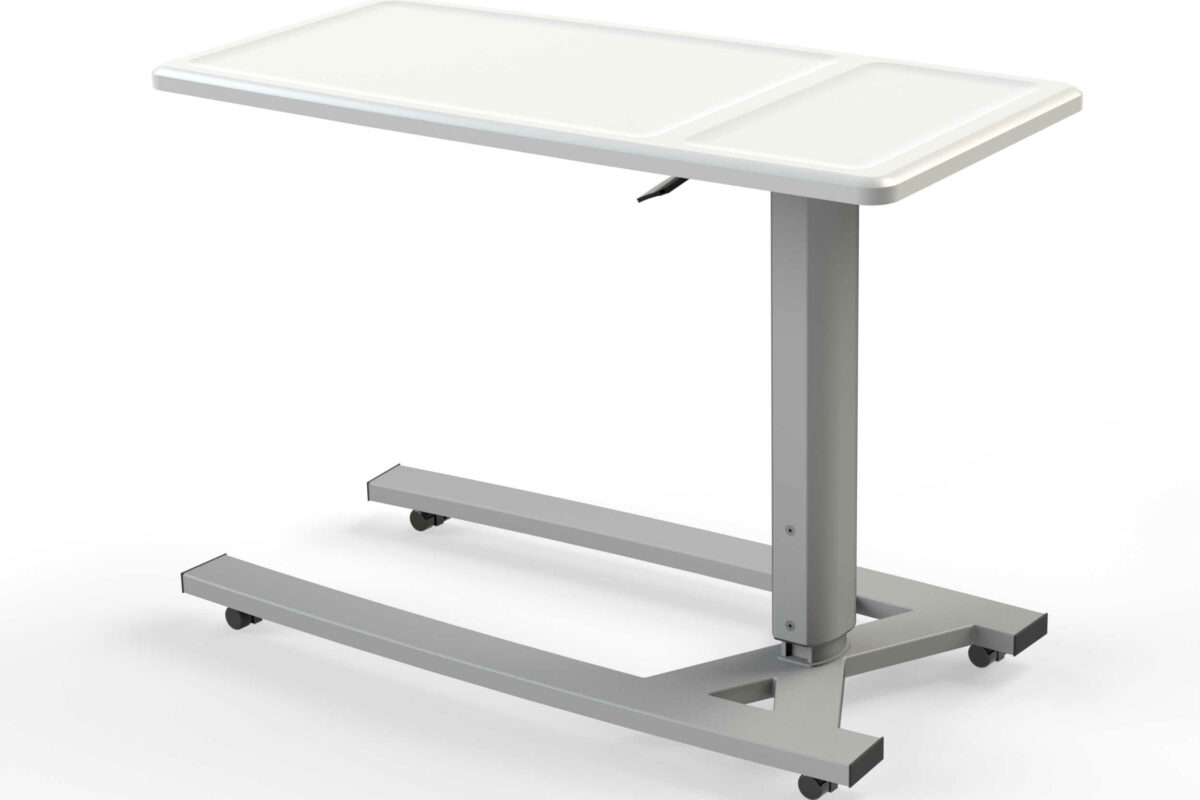
How MedViron Fetal Monitor Carts Support Patient Care & Workflow

Fetal monitoring is one of the most time-sensitive and workflow-dependent activities in perinatal care. The choice of fetal monitoring cart directly shapes how quickly and comfortably caregivers can document, reposition equipment, and remain at the bedside during assessments. MedViron’s fetal monitoring carts support these workflows through durable construction, intuitive layouts, and mobility designed for fast-paced departments.
Organization of Fetal Monitoring Supplies
In Labor & Delivery units, workflow interruptions often come from searching for supplies or repositioning equipment in crowded rooms. Cart organization can reduce these disruptions. Models like the MedViron EFM Cart – Three-Drawer and MedViron EFM Cart – One Drawer / One Door offer ample, logically divided storage for belts, probes, gel, cleaning supplies, telemetry leads, and spare cables. Quiet, smooth opening drawers and clear removable bins help staff quickly identify and reach supplies.
The MedViron Fetal Monitor Cart and MedViron Fetal Monitor Workstation provide additional workspace and can support mounted monitors, making it easier to position fetal monitoring screens where staff need them without relying on wall infrastructure. This matters during triage, labor assessments, and bedside procedures where the caregiver’s attention must remain on the patient—not the equipment.
Fetal Monitor Cart Mobility
Mobility plays a major role in workflow efficiency as well. All MedViron fetal monitoring carts use 5-inch casters for smooth rolling across patient flooring. Whether moving between rooms or repositioning around a bed, a stable and predictable glide reduces staff fatigue and speeds transitions. Locking casters ensure stability during monitoring or documentation.
Documentation is another major workflow component. In rooms without wall-mounted computers, the Fetal Monitor Workstation’s pull-out keyboard tray and optional monitor arms enable bedside charting without sacrificing posture. This reduces the back-and-forth movement between patient and documentation station, making care more continuous and efficient.
Cable and Hardware Management
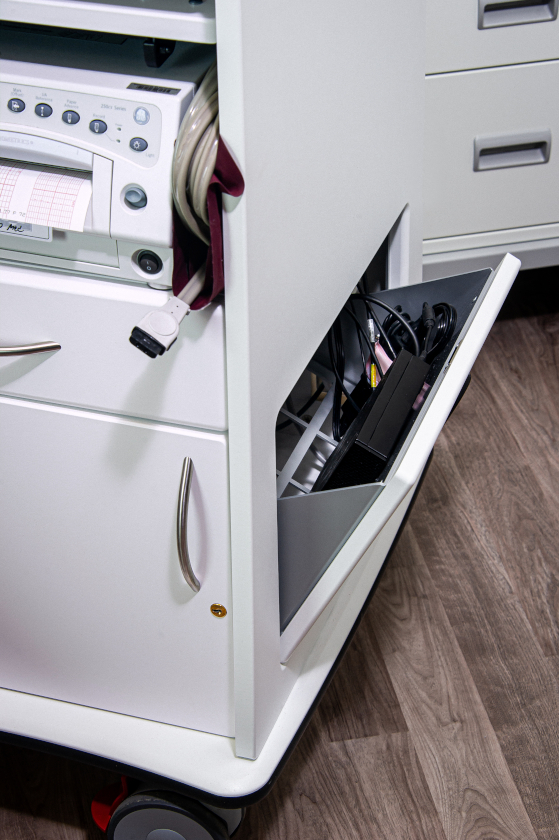
Cable management is often overlooked but critical in improving workflow. Rear grommets and side mounted hooks on workstation keep cords tidy and accessible, preventing tangling, tripping hazards, and caregiver frustration. Clean cable pathways and easy access to hardware through side doors also speed up troubleshooting—a valuable benefit during active labor. The side door provides a quick way to reach hardware that needs to be restarted when necessary.
When caregivers don’t have to search for supplies, rearrange equipment, or reposition monitors constantly, the workflow becomes smoother, safer, and more predictable. MedViron’s fetal monitoring carts are engineered around this principle, supporting consistent patient care through thoughtful design.