The Not-So-Hidden Problem with Cup Holders on Hospital Overbed Tables
Cup Holders vs. Cup Locators
In a busy patient room, small details can make a noticeable difference in daily workflow.
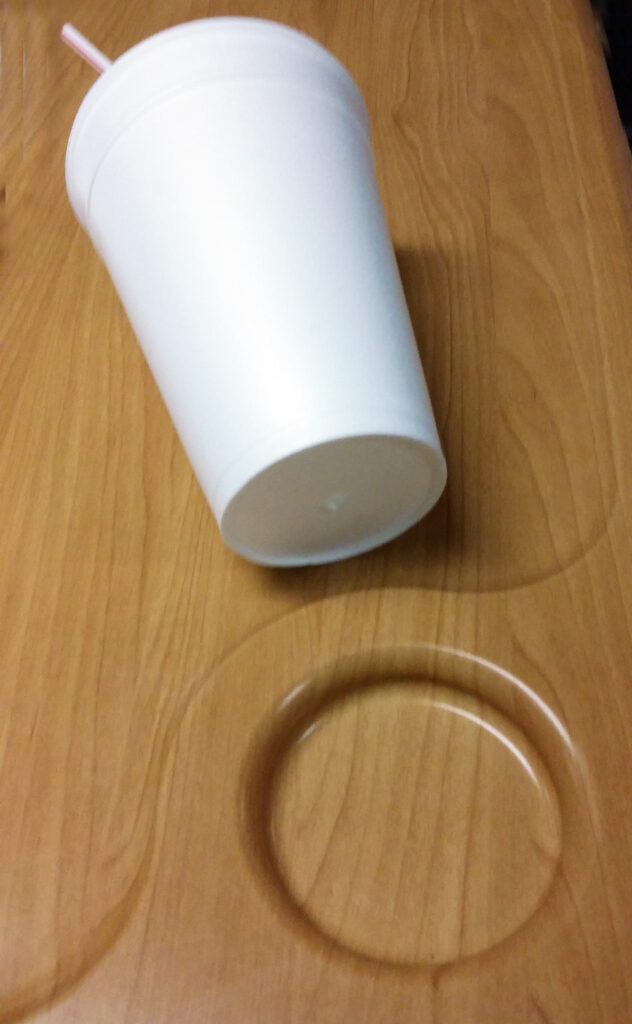
Looks helpful.
Many overbed tables include a shallow circular indentation in the tabletop that is often described as a cup holder. In reality, these features function more as cup locators. The cup still rests on the flat surface of the table, and it can easily be tipped or knocked over during normal patient movement, meal service, or routine care.
In many cases, the circular recess found on overbed tables is easier to manufacture because it can be molded or routed directly into the tabletop surface. While it suggests a place for a cup, it does not actually stabilize the cup itself.
For nurses and support staff, even a minor spill can interrupt workflow. A knocked-over drink means additional cleanup, fresh linens, and sometimes an uncomfortable patient.
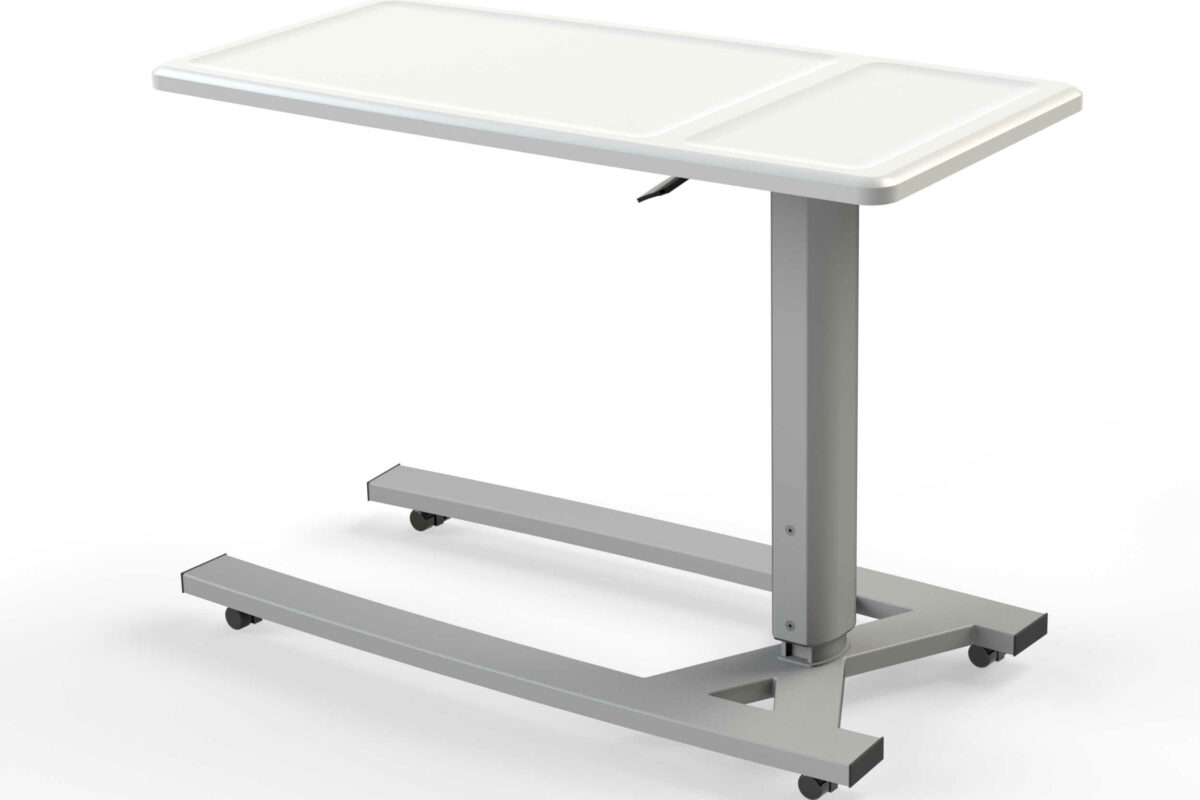
Actually helpful.
A true cup holder works differently. Instead of simply outlining where a cup might sit, it stabilizes the cup itself. By physically supporting the cup, the holder helps prevent tipping and reduces the likelihood of spills.
MedViron overbed tables use integrated cup holders designed with this practical purpose in mind. It’s a small design detail, but one that helps keep patient rooms orderly and allows caregivers to focus on care rather than cleanup.
Sometimes the difference between two overbed tables comes down to something simple: whether the cup holder actually holds the cup.
How Hospital Bedside Cabinets Are Actually Used Hospital bedside cabinets are typically specified
About Us
MedViron’s overarching goal is to design and manufacture aesthetically pleasing, high quality extraordinarily cleanable healthcare equipment. Products designed to assist in expeditious and thorough cleaning aid in the all-important quest to reduce the risk of hospital-acquired infections.
We use cookies to ensure that we give you the best experience on our website. If you continue to use this site we will assume that you are happy with it.