How to Evaluate Height-Adjustable Work Surfaces for Healthcare Environments
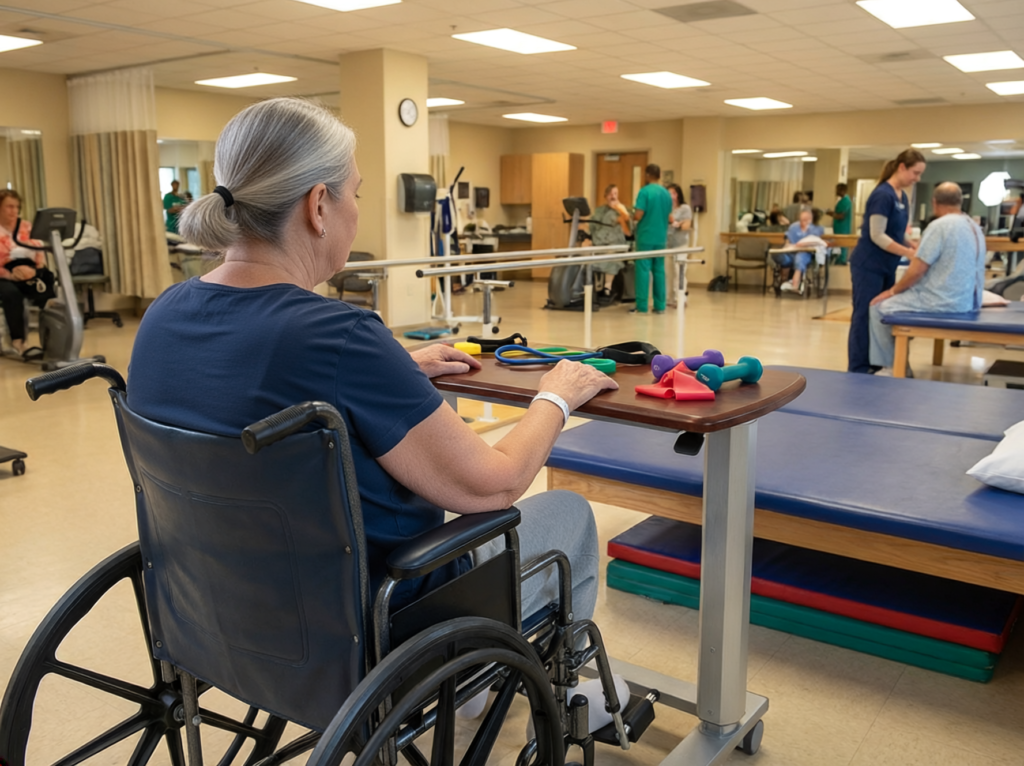
Height-adjustable work surfaces (HAWS) are now common across patient rooms, procedure areas, and clinical support spaces. What differentiates one height-adjustable work surface from another is how consistently the height-adjustment performs over time, when under weight load, during cleaning, and across repeated relocation and service cycles.
When deciding on HAWS for a healthcare facility, a meaningful evaluation of height-adjustable work surfaces should start by looking past basic features and instead examining mechanical choices, material behavior, and standardization. The following criteria outline how medViron designs for long-term performance, using medViron work surfaces as concrete examples of those decisions in practice.
Adjustment Method: Why MedViron Uses Pneumatic Systems Exclusively

Height-adjustable work surfaces generally rely on either electric motor systems or pneumatic gas-spring mechanisms. Both can raise and lower a surface, but they behave very differently over their service life.
MedViron has standardized on pneumatic gas-spring adjustment across all height-adjustable work surfaces, including mobile tables and procedure carts. This reflects a design preference for mechanical simplicity. Pneumatic systems operate without motors, control boards, wiring, or power supplies, eliminating entire categories of potential failure. From an evaluation standpoint, this matters because pneumatic systems remain operable regardless of power availability.
Stability by Design: Column and Base Architecture
Height adjustment introduces a structural challenge; maintaining stability as the work surface rises. When evaluating HAWS, the question is not whether a surface feels stable when new, but whether its structural design supports predictable behavior at full extension, under asymmetric loads, and after repeated adjustment cycles.
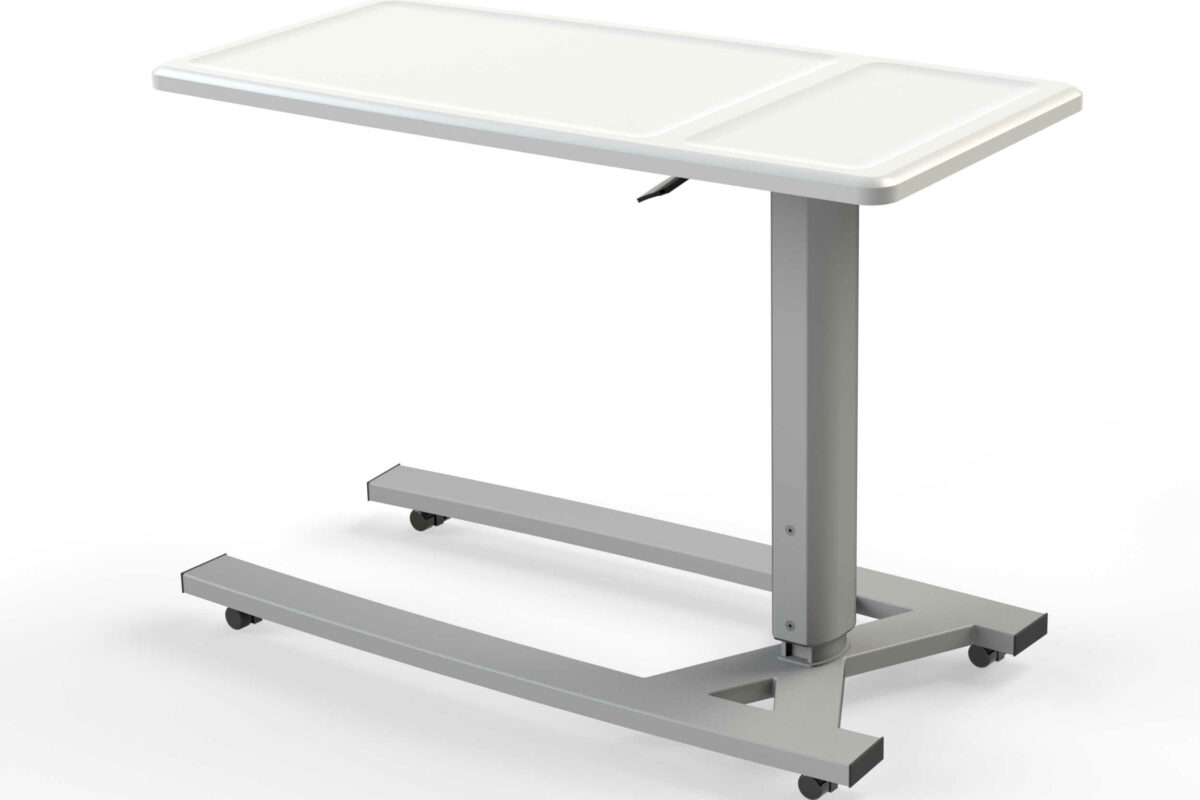
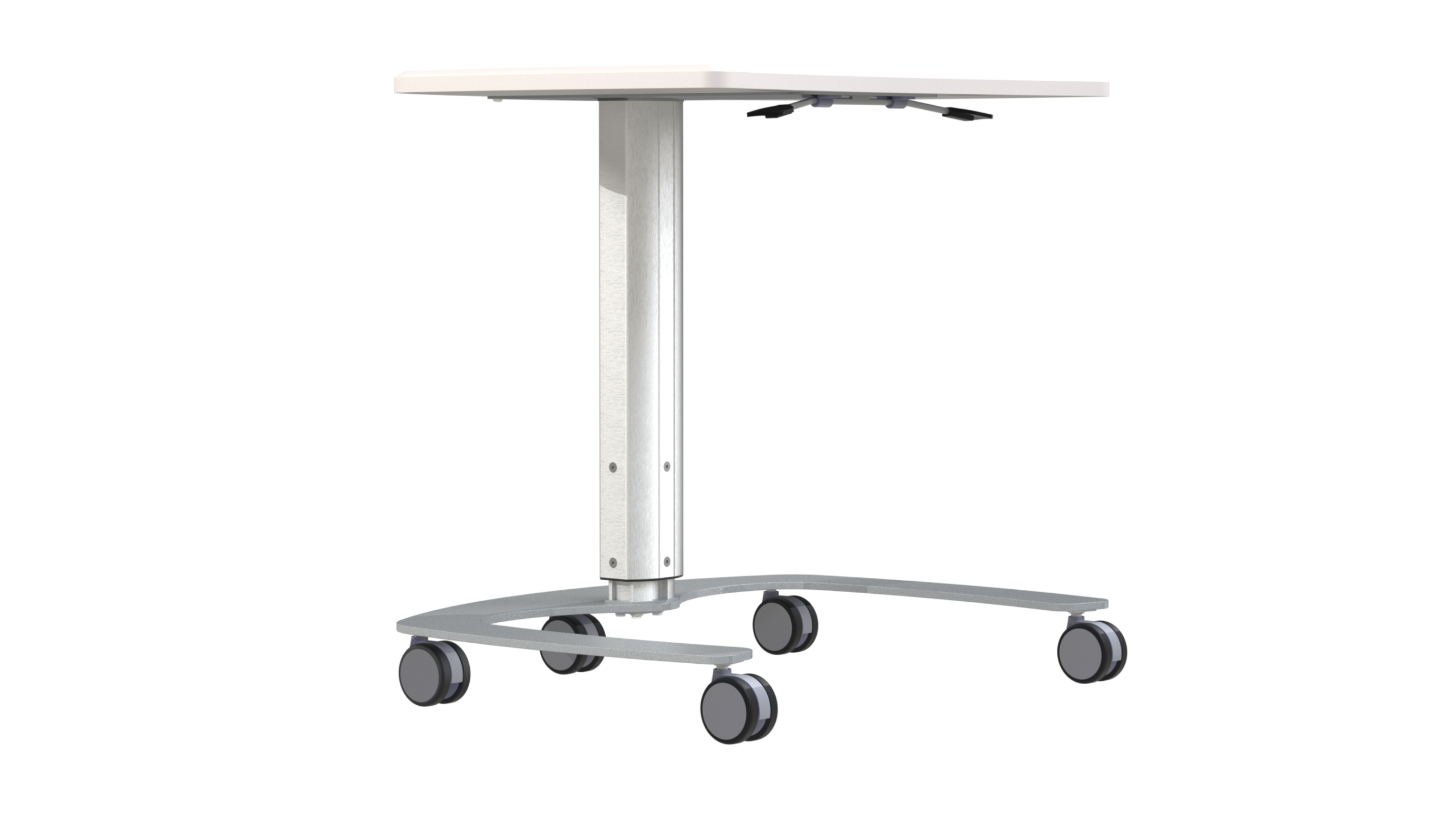
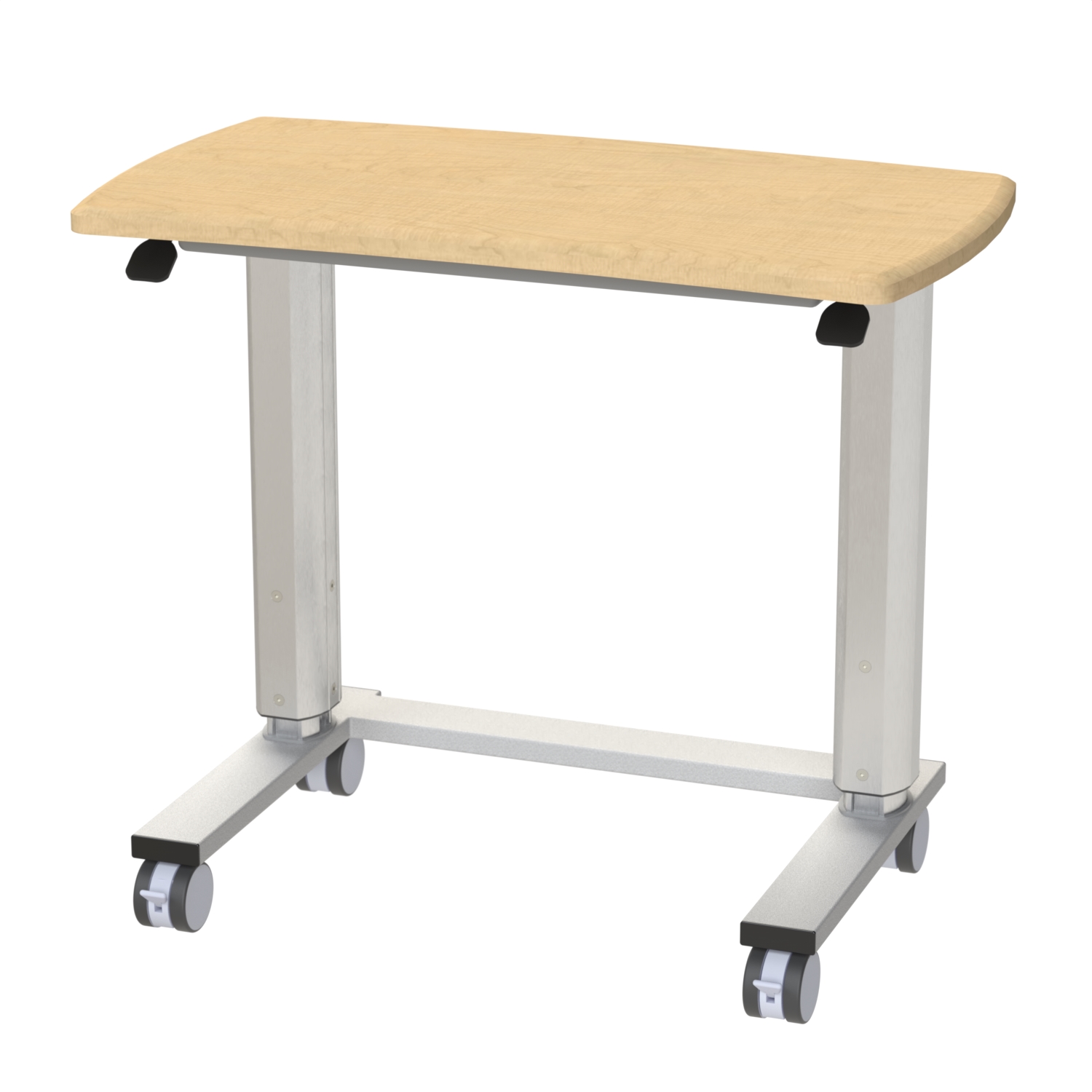
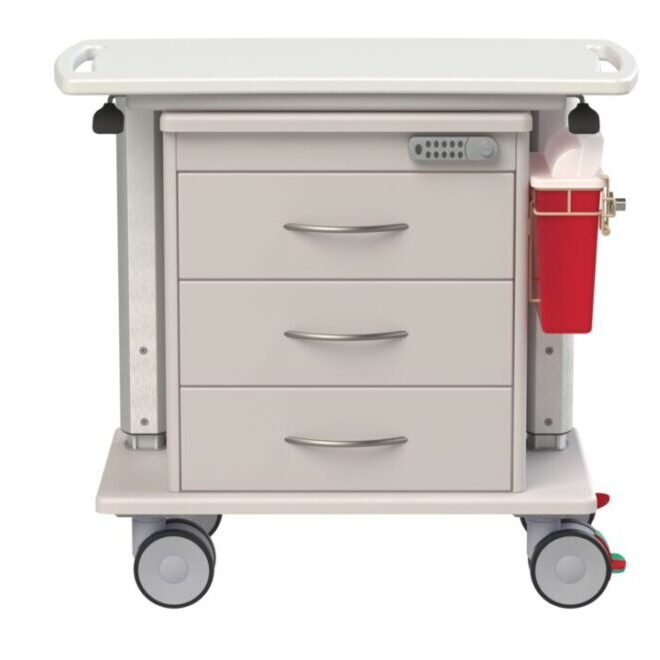
Differences between single- and dual-column systems are not cosmetic; they reflect intended use. For example, Roam 2.0 and Roam 2.0XL use a single aluminum column paired with a curved steel base, optimized for mobility. Stability is achieved through base geometry and weight distribution. Surf tables use C-shaped steel bases with dual aluminum columns, prioritizing lateral rigidity and load stability. The MedViron Height-Adjustable Procedure Cart applies the same pneumatics, but integrates them into a cabinet, where stability is influenced by both column placement and lower mass distribution.
Standardization Across Work Surface Families
One of the most consequential design choices in height-adjustable work surfaces is whether a manufacturer treats each product as a standalone solution or as part of a coherent equipment system. MedViron applies the same height adjustment and materials across its height-adjustable work surface families. This means that a Roam table in a patient room and a Surf table in a procedure area share common adjustment behavior, surface durability, and service approach, even though their appearance may differ. For healthcare systems with a variety of care environments, this standardization reduces maintenance complexity, parts inventory, and training for service personnel.
Surface Behavior Under Real Clinical Conditions
The work surface itself is the most continuously stressed component of any height-adjustable system. MedViron uses the same surface material across its HAWS product line to achieve consistent performance characteristics. From an evaluation perspective, the relevant considerations are: high resistance to edge damage and separation, stability under loads, and tolerance of repeated chemical cleaning.
By standardizing surface materials across Roam tables, Surf tables, and procedure carts, medViron reduces variability in how surfaces age and respond to use within a facility. However, the material itself is only part of the equation. How it is supported, bonded, and integrated into the underlying structure ultimately determines whether the surface remains serviceable over time.
Serviceability as a Design Requirement
MedViron does not design height-adjustable work surfaces as disposable products, but as serviceable systems intended for long-term use. For evaluators, this distinction affects lifecycle cost far more than initial purchase price. Equipment that can be maintained incrementally stays in service longer and avoids unnecessary cyclical replacement.
Key serviceability considerations include: pneumatic gas springs that can be replaced without discarding the entire unit, casters designed for easy removal and replacement, and highly durable structural components.
Evaluating Height-Adjustable Work Surfaces Beyond Features
The evaluation framework when choosing new HAWS for a facility should prioritize mechanical simplicity, stability at all heights, surface performance under real cleaning protocols, serviceability, and consistency across equipment used in one facility.
When assessed through these criteria, medViron height-adjustable work surfaces reveal their true performance characteristics. Reliability is not an accessory, but the outcome of design decisions made well before a product reaches the hospital floor.