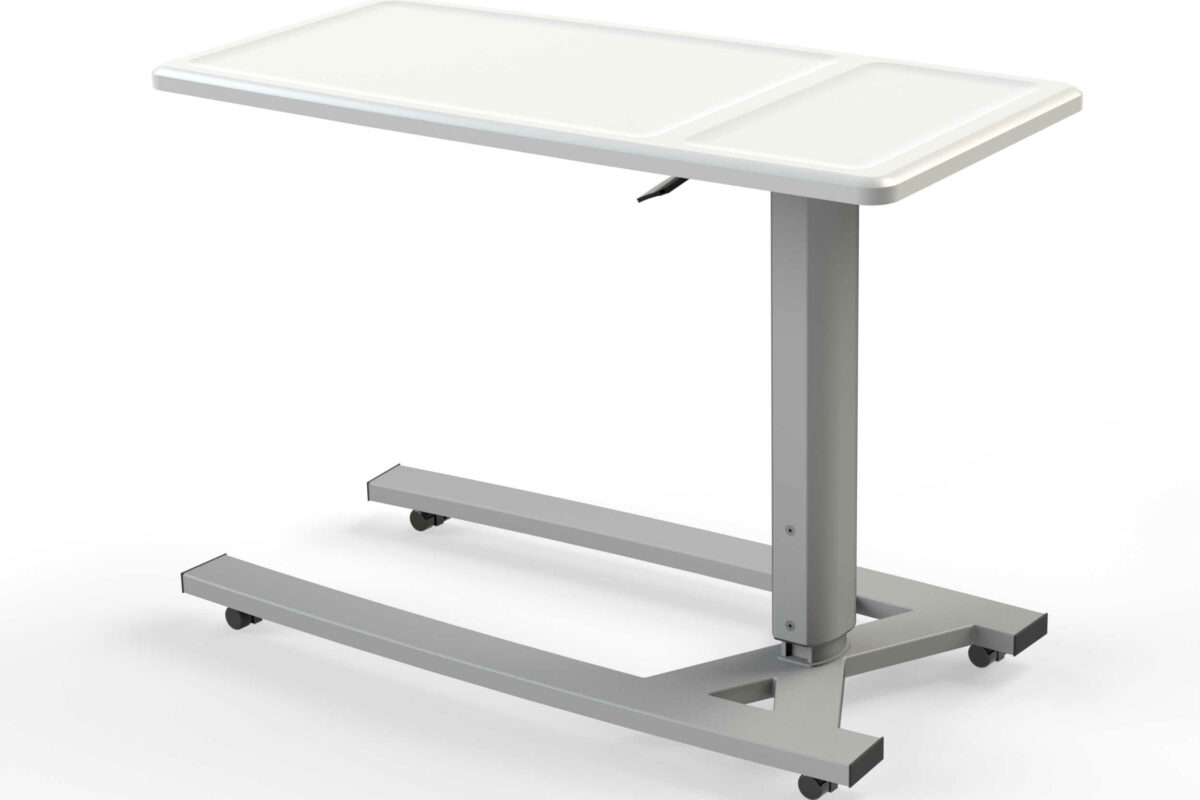
Why Height-Adjustable Work Surfaces matter at the Point of Care
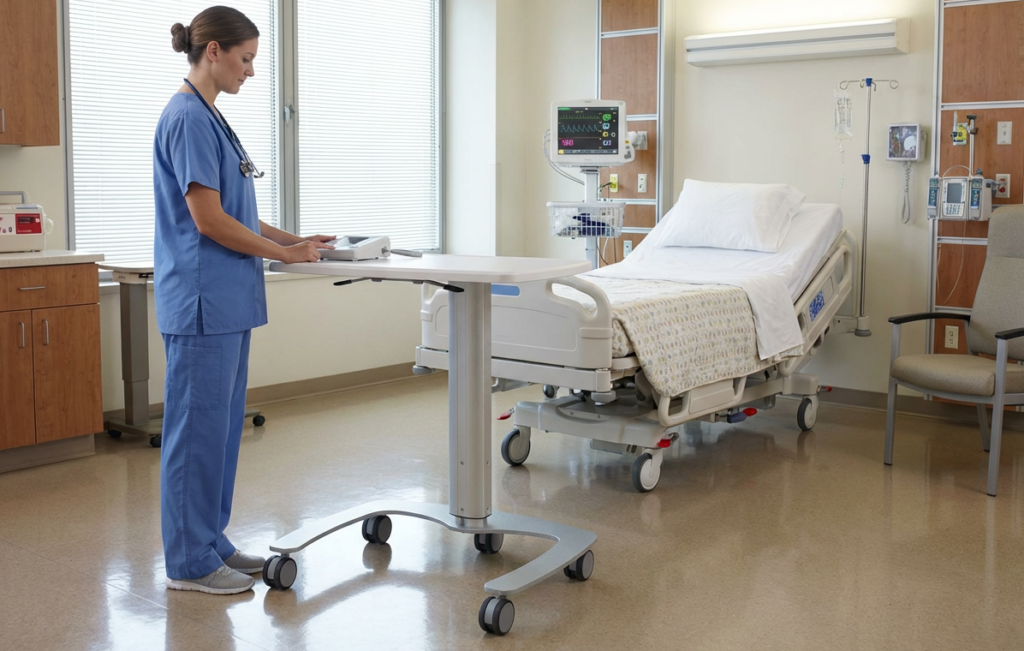
Height-adjustable work surfaces are now an expectation in clinical environments. The real differentiation lies not in whether a surface adjusts, but in how reliably it does so, how consistently it performs across different applications, and how well it integrates with other equipment in the care environment.
In practice, height-adjustable work surfaces are used across a wide range of clinical tasks, from documentation and device placement to procedures performed at the bedside. The ability to position a surface predictably and repeatably—rather than simply moving it up or down—affects how confidently caregivers can rely on the equipment during daily use.
When height adjustment behaves consistently, work surfaces become an extension of the care environment rather than a variable that caregivers must compensate for.
Design Consistency Across Height-Adjustable Equipment
Using a shared height-adjustment system across multiple products extends these benefits beyond a single work surface. MedViron height-adjustable work surfaces—including the Roam 2.0, Roam 2.0XL and Surf work surfaces and the Height-Adjustable Procedure Cart—utilize the same aluminum height-adjustment column architecture. These products also use the same style of work surfaces and height-adjustment mechanisms found in medViron overbed tables, along with similar steel base construction.
As a result of this shared design approach, medViron height-adjustable work surfaces and overbed tables present a consistent visual language in patient rooms, reinforcing a cohesive, intentional care environment rather than a collection of unrelated equipment.
This logical and efficient design approach allows healthcare facilities to standardize height-adjustable equipment across patient rooms and clinical areas, supporting consistency in use, training, and long-term maintenance.
The Role of Height-Adjustment Columns in Equipment Performance
A critical component of reliability is the height-adjustment column itself. Column design influences stability, movement behavior, and long-term performance under load. Well-engineered columns maintain alignment over repeated adjustment cycles and provide predictable resistance and positioning during use. MedViron’s column has been independently tested to 10,000 cycles with no loss of performance.
Because column performance directly affects how a work surface feels and responds, it becomes one of the most important engineering considerations in height-adjustable equipment. Column performance should be among the most important decision-making factors for buyers and specifiers of height-adjustable equipment.
Long-Term Performance Through Thoughtful Construction
Material selection and construction influence how height-adjustable work surfaces perform over time. Structural components must support repeated movement without loss of alignment, while high-contact surfaces must withstand daily use and routine cleaning. When height-adjustment systems are paired with durable materials and thoughtful construction, work surfaces remain dependable across years of clinical use.
MedViron applies consistent material standards across much of its product line, using melamine for structural stability in our carts and KYDEX thermoplastic for high-contact surfaces to support durability and predictable performance across different types of height-adjustable equipment.